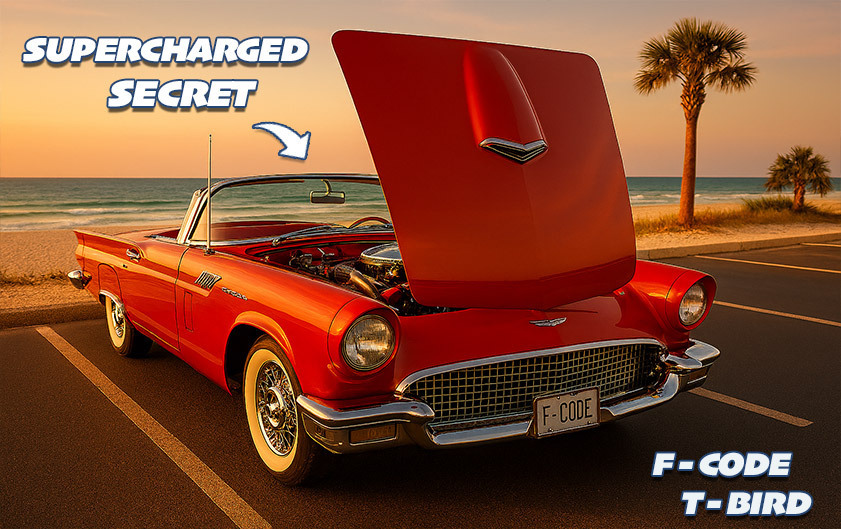
The Supercharged Secret: Unearthing the '57 F-Code Thunderbird
Ford's iconic '57 Thunderbird had one last trick up its sleeve for performance enthusiasts
Opinion
 SVT_MAN
Estimated 5 min read
Published Mar 14, 2026
. Updated Mar 21, 2026.
SVT_MAN
Estimated 5 min read
Published Mar 14, 2026
. Updated Mar 21, 2026.
Back in '57, the Thunderbird was already a legend in its own time. Ford's personal luxury car had captured hearts with its sleek lines, comfortable ride, and that distinctive porthole hardtop.
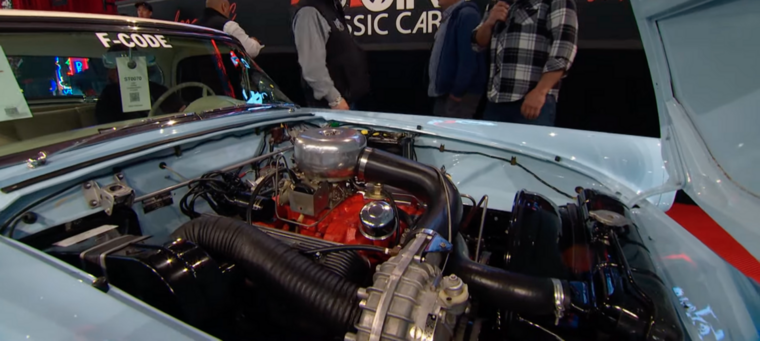
But for a select few who knew where to tick the right box, there was a hidden beast lurking beneath that elegant hood: the 'F-Code' Thunderbird, packing a factory-installed Paxton supercharger. It was a proper sleeper, a gentleman's hot rod that whispered power rather than screamed it.
The 1957 model year was a big one for the 'Little Birds.' It was the last of the two-seater generation before the T-Bird grew into a four-seater cruiser. Ford pulled out all the stops, giving it a longer tail, sharper fins, and a redesigned dash.
Under the hood, the venerable Y-block V8 was available in several guises, with the 312 cubic-inch plant being the top dog. Most folks were plenty happy with the standard setup, but a few knew there was more to be had.
The F-Code designation referred to the engine code itself – 'F' for the supercharged 312.
While the standard 312 might have been rated around 245-270 horsepower depending on carburetion, the F-Code rated at around 300 horsepower, but some even claim actual figures north of that.
Imagine the surprise at a stoplight when this elegant cruiser suddenly left more conventional muscle cars in its dust.
It wasn't just about raw power, though. The supercharger delivered a smooth, progressive power delivery, making the T-Bird feel effortlessly fast.
It was sophisticated performance for a sophisticated car, perfectly fitting the Thunderbird's persona.
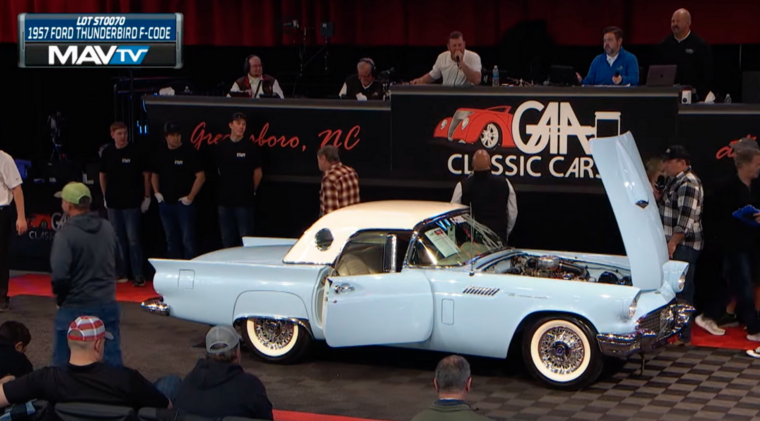
Finding an original F-Code today is like finding a needle in a haystack - and if you do, expect to pay hefty prices at auction. Many were raced, some lost to time, and others have been restored with varying degrees of accuracy. But when you do see one, often identified by the distinctive air cleaner housing and, of course, the supercharger itself, you're looking at a true piece of Ford performance history.
By the early 1960s, Ford’s “Total Performance” philosophy centered heavily on the Galaxie, which became the company’s primary weapon in NASCAR and other racing venues as increasingly powerful big-block engines appeared under its hood.
If you’d like to dive deeper into how the Galaxie evolved from an ordinary full-size sedan into one of the most culturally significant performance cars of the 1960s, I covered that story in detail with this article about the Galaxie 500.
Seen in that light, the F-Code Thunderbird represents an intriguing early chapter in Ford’s performance evolution — a bold experiment in factory supercharging that foreshadowed the company’s later domination on America’s biggest racetracks.
One of the people helping keep that story alive is Ryan Newman, a lifelong car enthusiast and former NASCAR Cup Series driver who has a deep appreciation for historically significant American performance machines.
 In the video below, Newman walks through the story and significance of the 1957 Ford Thunderbird F‑Code, explaining why this rare factory-supercharged Thunderbird still commands respect among collectors and racers alike.
Along the way, we also hear an intriguing story from the era:
Ford driver Marvin Panch once found himself racing in an F-Code T-bird against a driver who would also later become another driver closely tied to Ford’s performance legacy — Carroll Shelby.
At the time, Shelby was simply another talented competitor on the track - racing a Ferrari, no less - but history would eventually remember him as the man who helped create some of the most iconic high-performance Fords ever built.
Check it out after the jump!
Let me know in the comments!
But for a select few who knew where to tick the right box, there was a hidden beast lurking beneath that elegant hood: the 'F-Code' Thunderbird, packing a factory-installed Paxton supercharger. It was a proper sleeper, a gentleman's hot rod that whispered power rather than screamed it.
 The '57 Thunderbird's Swan Song
The 1957 model year was a big one for the 'Little Birds.' It was the last of the two-seater generation before the T-Bird grew into a four-seater cruiser. Ford pulled out all the stops, giving it a longer tail, sharper fins, and a redesigned dash. Under the hood, the venerable Y-block V8 was available in several guises, with the 312 cubic-inch plant being the top dog. Most folks were plenty happy with the standard setup, but a few knew there was more to be had.
Enter the F-Code: Forced Induction for the Street
Ford, never one to shy away from a little performance, had been experimenting with superchargers. The idea was simple: cram more air into the engine, make more power. For 1957, they offered a very special option: a McCulloch/Paxton centrifugal supercharger bolted onto the 312 Y-block. This wasn't some aftermarket job; this was a factory-engineered performance package, designed to give the T-Bird some serious punch.The F-Code designation referred to the engine code itself – 'F' for the supercharged 312.
While the standard 312 might have been rated around 245-270 horsepower depending on carburetion, the F-Code rated at around 300 horsepower, but some even claim actual figures north of that.
Imagine the surprise at a stoplight when this elegant cruiser suddenly left more conventional muscle cars in its dust.
It wasn't just about raw power, though. The supercharger delivered a smooth, progressive power delivery, making the T-Bird feel effortlessly fast.
It was sophisticated performance for a sophisticated car, perfectly fitting the Thunderbird's persona.
What Made the F-Code Special
Beyond the supercharger itself, the F-Code cars received a few other tweaks to handle the increased power. Beefier internals like forged pistons, a specific carburetor setup, and a heavy-duty air cleaner were all part of the package. These weren't high-volume production cars; estimates suggest only around 200 to 211 of these supercharged T-Birds ever rolled off the assembly line. That kind of rarity makes them highly sought after by collectors today.Finding an original F-Code today is like finding a needle in a haystack - and if you do, expect to pay hefty prices at auction. Many were raced, some lost to time, and others have been restored with varying degrees of accuracy. But when you do see one, often identified by the distinctive air cleaner housing and, of course, the supercharger itself, you're looking at a true piece of Ford performance history.
A Glimpse of What Was Coming
In hindsight, the supercharged Thunderbird program hinted at something much bigger brewing inside Ford Motor Company. The late 1950s were the beginning of Ford’s push toward organized racing dominance. Experiments like the supercharged F-Code Thunderbird helped Ford engineers explore high-performance engine development, high-speed durability, and factory-backed performance programs. These early efforts would soon shift focus away from the sporty two-seat Thunderbird and toward a much larger and more competitive platform for stock-car racing: the full-size Ford Galaxie.By the early 1960s, Ford’s “Total Performance” philosophy centered heavily on the Galaxie, which became the company’s primary weapon in NASCAR and other racing venues as increasingly powerful big-block engines appeared under its hood.
If you’d like to dive deeper into how the Galaxie evolved from an ordinary full-size sedan into one of the most culturally significant performance cars of the 1960s, I covered that story in detail with this article about the Galaxie 500.
Seen in that light, the F-Code Thunderbird represents an intriguing early chapter in Ford’s performance evolution — a bold experiment in factory supercharging that foreshadowed the company’s later domination on America’s biggest racetracks.
A Modern Introduction: Ryan Newman on the F-Code
Even today, the mystique surrounding the supercharged Thunderbird hasn’t faded.One of the people helping keep that story alive is Ryan Newman, a lifelong car enthusiast and former NASCAR Cup Series driver who has a deep appreciation for historically significant American performance machines.
In the video below, Newman walks through the story and significance of the 1957 Ford Thunderbird F‑Code, explaining why this rare factory-supercharged Thunderbird still commands respect among collectors and racers alike.
Along the way, we also hear an intriguing story from the era:
Ford driver Marvin Panch once found himself racing in an F-Code T-bird against a driver who would also later become another driver closely tied to Ford’s performance legacy — Carroll Shelby.
At the time, Shelby was simply another talented competitor on the track - racing a Ferrari, no less - but history would eventually remember him as the man who helped create some of the most iconic high-performance Fords ever built.
Check it out after the jump!
Ultimate Q-Car?
What's your favorite Q-Car? Is it a vintage sleeper like the F-Code Thunderbird, a muscle-era surprise - or something more modern?Let me know in the comments!
Post a Comment

Please Login To Your Account to comment.
User Comments
03/17/2026 @ 2026-03-17T03:40:43Z
The F-Code Thunderbird may be one of the earliest true Q-cars—a classy cruiser hiding serious performance.
But it certainly isn’t the only one.
What’s your favorite Q-car of all time?
Tell me in the comments. I might feature some of your picks in a future article.
03/28/2026 @ 2026-03-28T19:34:35Z
Forget about the Thunderbird. It's weak. Corvettes forever!